[Design Pattern] Factory Method
[Design Pattern] Factory Method
제가 느낀 팩토리 메서드(Factory Method) 패턴의 키워드는 “생성 책임 위임”입니다.
Factory Method Pattern
팩토리 메서드 패턴은 템플릿 메서드 패턴을 인스턴스 생성에 적용한 패턴입니다.
인스턴스 생성을 일종의 공장(Factory) 클래스에 위임하여 클라이언트에서 new Object() 방법으로 객체를 생성하는 것이 아닌, factory.create("some param")처럼 공장을 통하여 객체를 생성하게 됩니다.
패턴 구조
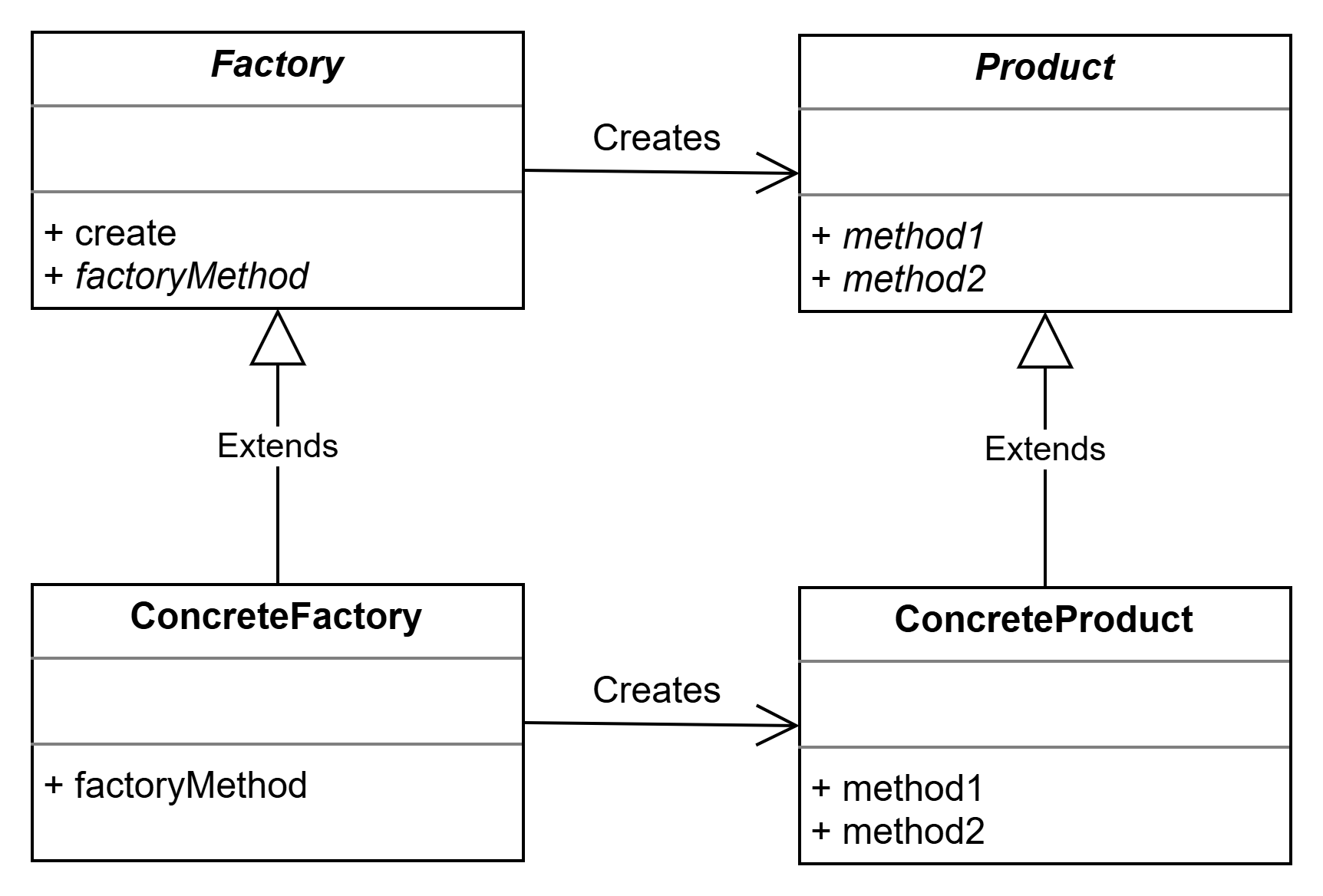
- Factory
- 최상위 클래스로 인스턴스를 생성하는 템플릿 메서드를 정의
- Product
- 실제 생성 할 인스턴스의 추상화
- ConcreteFactory
- 실제 인스턴스 생성 과정을 정의
- ConcreteProduct
- 실제 생성 할 인스턴스
구현 예시
1
2
3
4
5
6
7
8
9
10
11
12
13
14
15
16
17
18
19
20
21
22
23
24
25
26
27
28
29
30
31
32
33
34
35
36
37
38
39
40
41
interface Product {
    // 실제 인스턴스들이 공통으로 수행하는 일.
    void use();
}

abstract class Factory {
    // 객체 생성 과정을 정의하는 탬플릿
    final Product create() {
        // ... 전체 객체 생성 전처리 ...
        Product res = createProduct();  // 객체 생성
        // ... 전체 객체 생성 후처리 ...

        return res;
    }

    // 팩토리 메서드 : 실제 인스턴스를 생성을 하위 클래스에 위임
    abstract protected Product createProduct();
}

class ConcreteProduct implements Product {
    // something...
}

class ConcreteFactory extends Factory {
    @Override
    ConcreteProduct createProduct() {
        // 타입 전용 전처리 ...
        ConcreteProduct ins = new ConcreteProduct();
        // 타입 전용 후처리 ...
        return ins;
    }
}

class Client {
    void use() {
        Factory factory = new ConcreteFactory();
        Product pro = factory.create();

        pro.use();
    }
}
간단 예제
아래 예제를 통하여 간단하게 사용 예시를 보겠습니다.
프로젝트 초기 요구 사항
- 알림 어플리케이션를 개발하려고 합니다.
- 사용자에게 알림을 주는 방법으로는 앱 푸시, 문자 방식이 존재합니다.
Factory Method 패턴 적용 ✖
1
2
3
4
5
6
7
8
9
10
11
12
13
14
15
16
17
18
19
20
21
class SmsNotification {
    void send() {
        System.out.println("문자 알림 전송");
    }
}

class PushNotification {
    void send() {
        System.out.println("푸시 알림 전송");
    }
}

class NotificationService {
    public void notify(String type) {
        if (type.equals("SMS")) {
            new SmsNotification().send();
        } else if (type.equals("PUSH")) {
            new PushNotification().send();
        }
    }
}
해당 코드는 다음과 같은 문제가 발생하게 됩니다.
- 객체 생성 과정이 복잡해지면 서비스에서 너무 많은 일을 하게 됩니다.
1
2
3
4
5
6
7
8
9
10
11
12
if (type.equals("SMS")) {
 SmsNotification noti = new SmsNotification();

 // 여기서 뭔가 많을 일 수행
 noti.initSession();
 noti.validate();
 noti.connect();
 noti.commnuti();
 // 등등

 noti.send();
}
- 이렇게 모든 로직이 서비스 메서드 내부에 들어오면 유지 보수하기 너무 힘들게 됩니다.
- 생성 로직과 사용 로직이 강하게 결합하게 됩니다.
- SRP(단일 책임 원치)을 위반하게 됩니다.
단, 실제로 구체 객체(ConcreteProduct) 종류가 몇 개 안 되고 또한 추가되지 않는다면 현재 방법이 더욱 좋은 코드일수 있습니다.
Factory Method 패턴 적용 ✔
- 추상화 계층
1
2
3
4
5
6
7
8
9
10
11
interface Notification {
  void send();
}
abstract class NotificationFactory {
  public final Notification create() {
      Notification res = createNotification();
      return res;
  }

  abstract Notification createNotification();
}
- 앱 푸시 구현
1
2
3
4
5
6
7
8
9
10
class PushNotification implements Notification {
  void send() {
      System.out.println("앱 푸시 알림 전송!");
  }
}
class PushNotificationFactory extends NotificationFactory {
  Notification createNotification() {
      return new PushNotification();
  }
}
- 문자 알림 구현
1
2
3
4
5
6
7
8
9
10
class SmsNotification implements Notification {
  void send() {
      System.out.println("문자 알림 전송!");
  }
}
class SmsNotificationFactory extends NotificationFactory {
  Notification createNotification() {
      return new SmsNotification();
  }
}
- 서비스 계층
1
2
3
4
5
6
7
8
9
10
11
12
13
14
class NotificationService {
  public void notify(String type) {
      NotificationFactory factory;
      if (type.equals("SMS")) {
          factory = new SmsNotificationFactory();
      } else if (type.equals("PUSH")) {
          factory = new PushNotificationFactory();
      }

      Notification notification = factory.create();

      notification.send();
  }
}
이를 통하여 서비스에서는 사용자의 요청에 따라서 어떤 알림을 전송할지 선택만 하면 됩니다.
패턴 장/단점
장점
- 객체 생성과 사용을 분리하여 서비스 코드가 가벼워지고 역할이 명확해집니다.
단점
- 관리해야 하는 클래스가 늘어납니다.
- 한 객체에 한 공장이라서 객체가 늘어가면 팩토리 클래스도 증가합니다.
- 구조가 복잡해 보일 수 있고, 소규모 프로젝트에서는 과설계가 될 가능성이 존재합니다.
참고 문헌
- Yuki, H. (2022). JAVA 언어로 배우는 디자인 패턴 입문(김성훈, 옮김). 영진닷컴.
- https://refactoring.guru/ko/design-patterns/factory-method
- https://bcp0109.tistory.com/367
This post is licensed under CC BY 4.0 by the author.